A Discussion with Richard Saykally on HydroGrameen
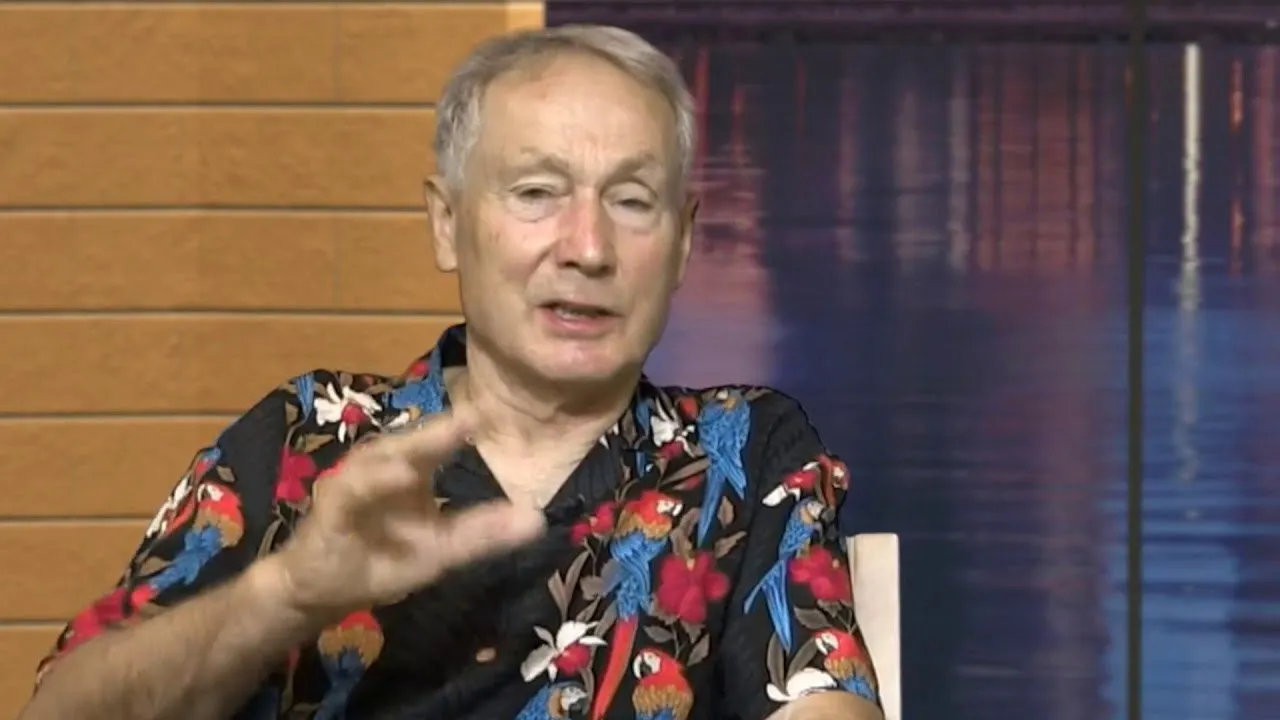 A Discussion with Richard Saykally on HydroGrameen
Richard J. Saykally, Professor of Chemistry at UC Berkeley since 1979, leads the Saykally group, which studies the structure and dynamics of water and aqueous systems with laser and synchrotron spectroscopy. He did his graduate work at the University of Wisconsin–Madison. He has more than 450 publications, belongs to the National Academy of Sciences and the American Academy of Arts and Sciences, and received the E. O. Lawrence Award. In this conversation, recorded in 2016 ahead of the Seventh Annual Townes and Tagore Seminar, which he convened, IIBHB cofounder Dr. Rash B. Ghosh talks with him about his memories of Charles Townes and Glenn Seaborg, his water research and his group, desalination and HydroGrameen, the global water crisis, and his joining the IIBHB.
Rash B. Ghosh: Hi, I am Dr. Rash B. Ghosh, one of the cofounders of the International Institute of Bengal and Himalayan Basin, and I am here with Professor Richard Saykally, Professor of Chemistry, University of California, Berkeley. Professor Saykally is one of the leading authorities in water chemistry in the world, and we are very fortunate to have him lead us in our future activities. I request him to tell a few words about his work and also his association with Professor Charles H. Townes, who was one of the cofounders of IIBHB. He was also one of the leading scientists in our time, and he was also the father of the laser. Richard.
Richard Saykally: Yes. My first encounter with Professor Charles Townes was a memorable one. In 1970, I began graduate school at the University of Wisconsin in Madison, and I joined the group of Professor Claude Woods, who was a microwave spectroscopist. When I went into his office to tell him that I would like to join his group, he agreed to accept me, and he reached behind his desk and pulled this book off of his shelf. The book was Microwave Spectroscopy, by Charles Townes and Arthur Schawlow, and he handed this book to me. He said, “This is the Bible. Go read it.”
So my first introduction to Charles Townes was to go away and read his beautiful book on microwave spectroscopy, and I read it very carefully. That was my introduction to Charles Townes. And then I read many of his papers as a graduate student.
When I came to Berkeley as a professor in 1979, people in the chemistry department knew of my respect and admiration for Charles Townes, and they took me over to his office in the physics department and introduced me to him. And then Charles Townes invited me to attend his weekly research group meetings, which I did, so I had a pretty close association with him for the first few years I was at Berkeley. So I’ve always had great respect for him in many ways.
Making Science Fun
Rash B. Ghosh: Richard, would you kindly tell us about your contribution in the water research? You have done a lot of work, extensive work, and published about 450 scientific articles, and supervised about 100 PhD as well as postdoctoral candidates. It seems to me it’s a lot of work, and I imagine how you could have done all this. And I am very excited when I met your graduate students and postdocs in your lab, and you’re dealing with them; it’s very impressive. Can you tell us a little bit more, so the people know—whether we can get across to the future generations—how harmonious and very friendly the environment is, with a lot of respect? And I want to know: what is the secret?
Richard Saykally: Well, I believe the secret of interacting with graduate students and postdocs is to make science fun. That’s when everything works really well: when we’re all just having fun doing science. And that’s the atmosphere I try to maintain in my group, and it works really well. Professors at Berkeley like myself have a great advantage, in the sense that we get the very best graduate students in chemistry in the world, and they’re so smart, and they’re so enthusiastic, it’s so much fun to work with them. So it comes very naturally to have such a group.
Rash B. Ghosh: So you also did a great deal of work on water chemistry, and it’s a very complicated subject. And I have been doing the studying all my life, and still I feel the more I know, the more I know how little I know. And sometimes I feel like a fish out of water.
Richard Saykally: So my view of the water situation is that we need some major advances in technology to be able to, for example, reduce the cost of desalination and make it available to a much larger fraction of people on the earth. Right now it’s too expensive. And this is one of the areas that my group does fundamental research in. If we could reduce the cost of desalination by a factor of 20 or 30 by new technology, this would have an enormous impact. So many people in the world are thinking about this.
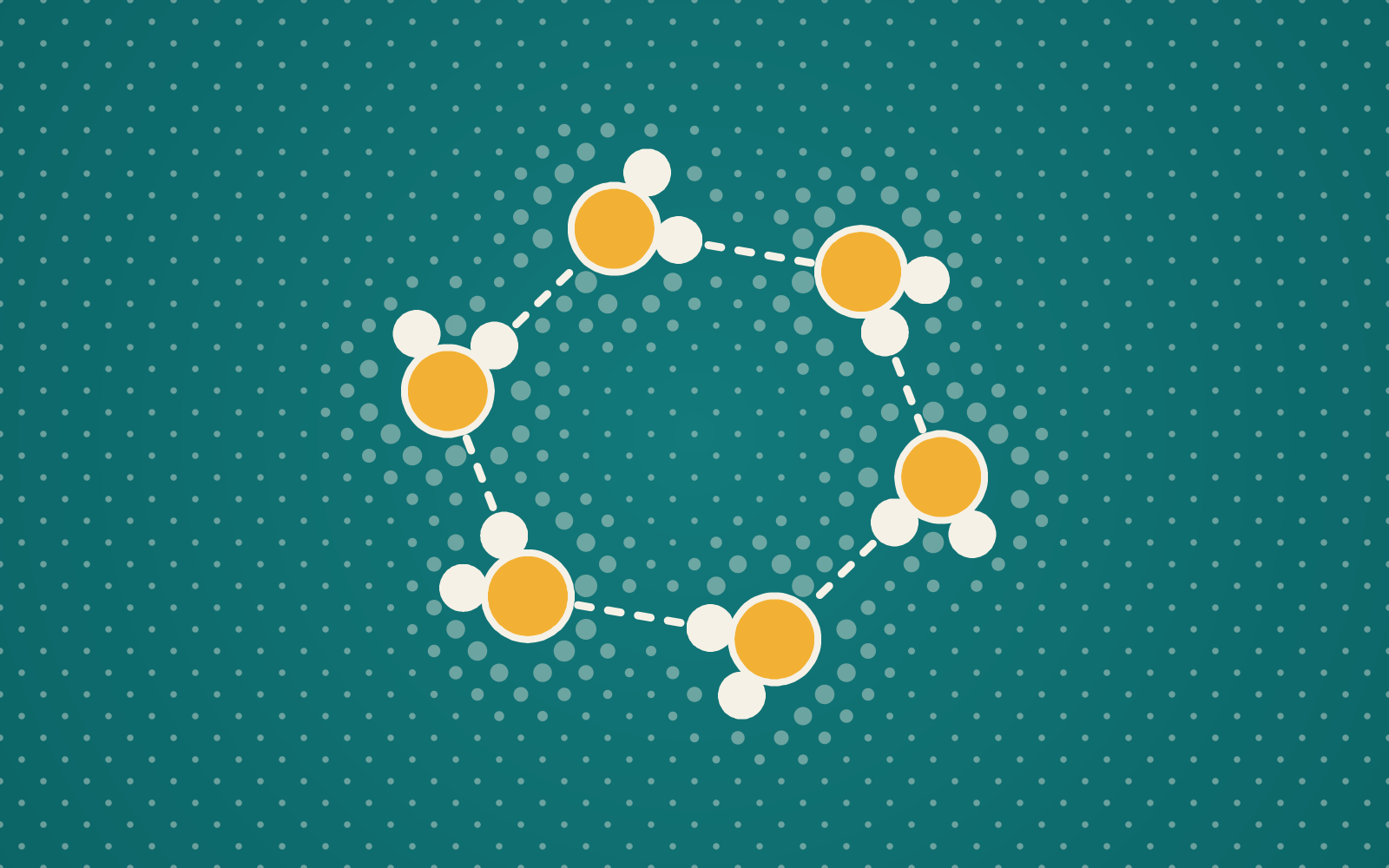
And the idea that many have, and our group is beginning to work on, is: if you confine water in, let’s say, carbon nanotubes—confining water in a very small space changes the properties of water, and water flows like a quantum mechanical object, for example. So I study such very fundamental aspects of water with the long-term goal of developing some breakthrough new technology that could, for example, lower the cost of desalination by a factor of 50, or could improve filters. Of course, filtering water is very crucial for the HydroGrameen project: we must make sure that the water put back into the aquifers is very pure. And this is generally done by filtration methods, which are also very expensive and slow. And so studying the technology of how water and salt water interact with various types of membranes is an absolute necessity to move forward on these more advanced filtration concepts.
So my group studies how water interacts with solids, such as—right now we’re studying how water interacts with graphene. And these are very fundamental aspects of water that, remarkably, are not well understood. So our approach is to look at very fundamental aspects of water and generalize this knowledge into practically useful concepts for filtration, for desalination, and for actually making water out of the sky. This is a new, exciting area, with lasers.
Desalination and HydroGrameen
Rash B. Ghosh: So when you refer to HydroGrameen: that was the technology developed by the International Institute of Bengal and Himalayan Basins. A lot of people work with me—it’s about eight Nobel laureates, in California and beyond—under the leadership of Professor Charles H. Townes. What is your thought, and how can we be benefited from your work and your experience with desalination? We want to hear a little bit of your opinion and view on that.
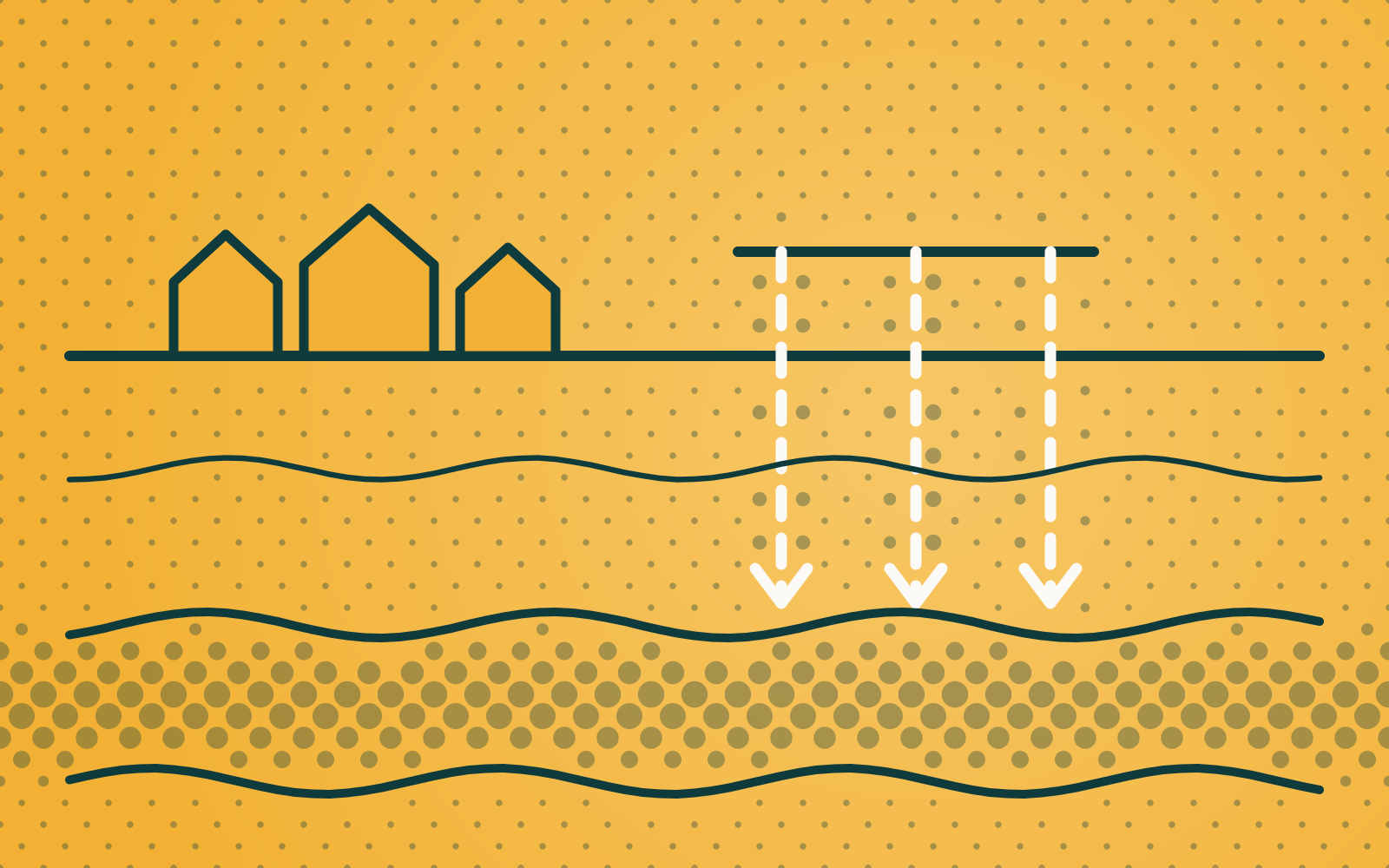
Richard Saykally: I think actually I would view desalination and HydroGrameen as complementary efforts that have different domains of applicability. HydroGrameen is beautiful in the sense that it’s a concept that nature itself has used for many centuries, where rainwater percolates into the aquifers. It gets purified. We have depleted those aquifers. So I think the key issue in replenishing the aquifers in the HydroGrameen project is to not pollute the aquifers when we refill them. So we have to be excruciatingly careful with how we put water into the aquifers. We have to be sure that the water is properly filtered and doesn’t contain arsenic, for example, doesn’t contain radioactive elements in a harmful level of concentration.
And I think the key technology to doing this is new concepts of filtration based on new materials that are being developed by a variety of people. For example, a very intensely pursued subject in chemistry and physics these days is two-dimensional materials such as graphene, which is pure carbon made of planar arrays of six-membered rings, that has very special properties. And there are other two-dimensional systems that are likely to have a big impact in the future on how efficiently we can filter salt water and polluted water. And that technology could then be used to effectively and safely refill the aquifers in the HydroGrameen project, as well as impact desalination efforts too.
Rash B. Ghosh: I think what you exactly express, your concern, is the concern of Professor Townes also. And that is one of the reasons it has taken so long—and other reasons: our losing facility, and all these and other actions disrupted our work, but I’m not getting into that. The reason we took longer: because the aquifer varies so much, even in the same region, and it is so huge, that if you apply it across the planet, then it has to be uniform. So Professor Townes was concerned about exactly what you just said. I’m so delighted that all pundits and wise men think alike.
The Seminar and the Global Water Crisis
Rash B. Ghosh: Would you kindly tell what is your plan for our next seminar on 17th September, and how do you want to proceed, and what will be my role in it? How can I assist you?
Richard Saykally: Well, since you offered me the opportunity to lead this next seminar, I’ve done some thinking about how I would like to see this organized. And interestingly, in the Bay Area there are quite a number of organizations that have come into being very recently who are pursuing studies of water in various contexts. A few examples are the Berkeley Water Center, run out of the Department of Engineering. The Lawrence Berkeley Laboratory has a big new effort, funded by the Department of Energy, in the so-called water–energy nexus: the connection between energy and water, which is a very intimate and crucial one. And I have a small group of colleagues in the chemistry department who study solvation, primarily solvation by water; we call ourselves CALSOLV. And we have a sister organization in Germany called RESOLV, the Ruhr Valley study of solvation.
So I would like to get representatives from all of these different entities that are studying water to participate in our seminar on the 17th of September. And I would like to have the leaders, the professors, and the senior members come, as well as their students, so that we can all see these different approaches to water science. And then from your organizations, we can learn about how we can go about applying some of the technology here in the real world, in complicated environments.
Rash B. Ghosh: I think in that direction, we hope that you can lead us to the real prosperity and address the global water crisis. And you are profoundly, deeply concerned about the global water crisis, and we would like you to say a few words about the global water situation, and how we can use our HydroGrameen.
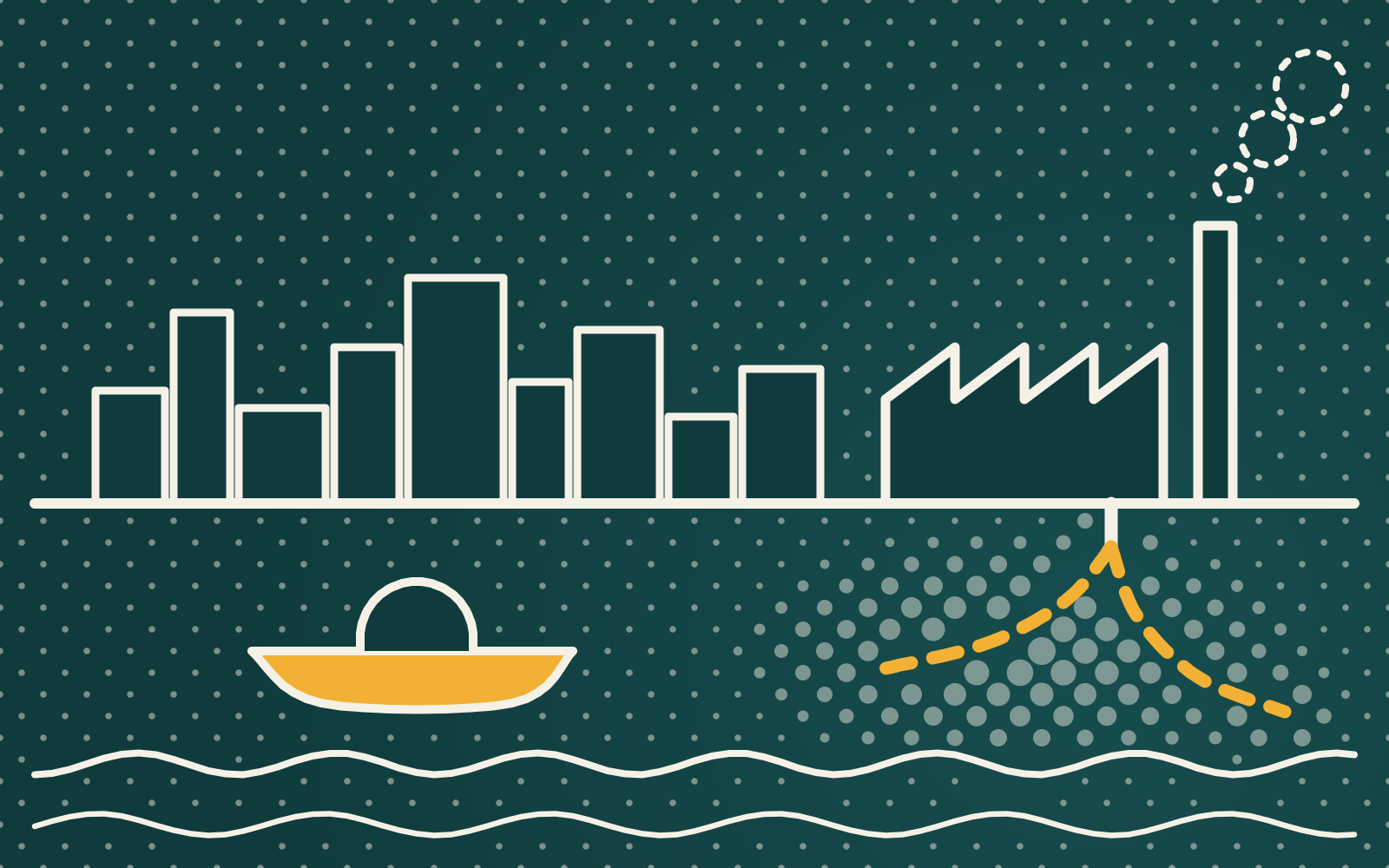
Richard Saykally: Well, I think, in my opinion, one of the serious factors that must be dealt with in the near future is the very rapid population growth in poor parts of the world. And couple that with climate change, what the climate change scientists are telling us: that as the Earth warms, the wet regions of the Earth will get wetter, and the dry regions of the Earth will get drier. And it’s estimated that roughly 35% of the Earth’s population lives in dry areas that are already marginal, and that situation is likely to become dire unless we develop some effective ways to produce and transport water in these regions that are currently marginally dry and are likely to become much drier in the forthcoming decades.
So HydroGrameen is a very intelligent solution. As you know, California has adopted this philosophy in the Central Valley. Because of the five-year drought that has impacted California, growers have turned to using groundwater to irrigate their crops, and they are seriously depleting the aquifers in the Central Valley. So now there’s a project underway to try to refill these aquifers. And I think that’s a very intelligent worldwide solution. But as you said, this must be done very carefully, so that we don’t make the problem worse by polluting those aquifers.
Teaching with Glenn Seaborg
Rash B. Ghosh: Could you say a few words about Professor Glenn T. Seaborg, who is one of our cofounders and instrumental in the survival and moving forward with our work on HydroGrameen? I expressed my interest when I met him and talked to him: “Can I work with you and discover some elements?” And he was telling, “It is done. I want to work with you. You want to do what you have been doing. If I start my new life, I’m going to start work on water. Let’s do it, and give me an opportunity. I have been referred to as connected with the bomb. We did not want the bomb to go to Japan, but it was not in our hands. Let’s work with you. I want to work with water, you know.”
So can you tell a few words about Glenn T. Seaborg? His son, David Seaborg, has been working with me for the last 16 years. So if you say a few words: he’s your ex-colleague; for many years, you worked together.
Richard Saykally: Yes, I had the honor and good fortune to teach freshman chemistry at Berkeley with Glenn Seaborg, and I was able to watch him lecture to the class. And he was a master at weaving important social and political concepts in with the science. He would tell stories about how he worked closely as an advisor with five different presidents, and how he would get phone calls early in the morning. I remember one story he told. He says the phone rang really early in the morning, and he picked it up, and he says, “Glenn?” He says, “Yes.” He says, “This is Jack.” He goes, “Jack?” “Jack Kennedy.” And President Kennedy had some important things to ask him about nuclear arms control in that day.
But in the course of teaching freshman chemistry with Glenn Seaborg: he was very interested in water chemistry, and he talked about the importance of understanding the detailed water chemistry for the whole world. I also remember he would spend a lot of time going from laboratory to laboratory to interact with our very large freshman chemistry class, with 1,500 students in it. And he would walk around and talk to them all about this, and tell them how important the aqueous chemistry of the elements that they were doing in the lab—how this was very important, and they should learn it. He would autograph all of their lab books for them.
And the other thing that was very interesting about Glenn is he almost always carried a diary with him. And whenever something happened that he thought was notable, he would sit down, he would write a page in his diary about this. He was very [inaudible]. He had many volumes of his diaries, and I know that he condensed them into at least seven books.
And by the way, as I was reading about the HydroGrameen project, I found this book. This is written in Bengali. This is not very easy to read for me, but this is the kind of thing Glenn Seaborg used to lecture on. Here’s a chapter on identification of the acid radicals. That’s the only English words I can read here. So you wrote this book?
Rash B. Ghosh: Yes. I wrote many before I came to England to read for a PhD. I wrote about four or five of them.
Richard Saykally: Four or five books like this?
Rash B. Ghosh: Yes. It’s in English first, and then I wrote the Bengali version. I also wrote a textbook on higher secondary level, or 12th grade, the two volumes, and also undergraduate chemistry, called BSc Chemistry. But I don’t take any credit for them, although they were very successful nationwide. The moment I met Professor Kershaw in England—my professor was an expert, a leading expert in tropical medicine—I washed my hands, and I’m going to do real research. So anyway, these were good, but I want to write something as a real authority.
Richard Saykally: This is very interesting. As you were asking me about Glenn Seaborg: these are the very kinds of things he would talk about. He was teaching students these very same experiments, but not in Bengali. He did it in English.
Rash B. Ghosh: So you’re right. We will talk about all these, and I’m glad that you have a closer look at it and that it helps.
Richard Saykally: And you say here also, you were at Stanford in what year?
Rash B. Ghosh: I think it’s early 1980s. And we are the first people, a group of people who worked for NASA for global warming, before, many years later, Al Gore came into the global warming.
Richard Saykally: He invented it, didn’t he?
Rash B. Ghosh: So we work on the interaction of climate: if you go globally, eastern hemisphere to western hemisphere, north to the southern hemisphere, then how the vegetation pattern changes. But I am not a plant biologist or anything; my interest is in chemistry. So I focus on canopy chemistry, litterfall, and how the macro- and micronutrients and the retranslocation—how they purify the environment. It’s very interesting. It was a subject, and it was funded by U.S. NASA, working in the Herrin Laboratories.
From Linus Pauling to Charles Townes
Rash B. Ghosh: We would also like to know a few words about Linus Pauling, if you have any association with him.
Richard Saykally: Well, I have an interesting lineage with Linus Pauling through the academic circle. So I got my PhD at the University of Wisconsin, working with Professor Claude Woods, microwave spectroscopy. Claude Woods got his PhD with E. Bright Wilson, microwave spectroscopist at Harvard, who was one of the great pioneers. E. Bright Wilson at Harvard got his PhD with Linus Pauling. So I am the academic great-grandson of Linus Pauling, which is a great honor in itself.
So there were two lines of evolution in the academic world for microwave spectroscopy. One line was the Linus Pauling line, with E. Bright Wilson and all the many excellent microwave spectroscopists who came from Harvard, out of E. B. Wilson’s group. That’s the Linus Pauling descent. And then there’s the Charles Townes line of descent.
And by the way, Charles Townes: one of the major reasons that he got so interested in microwave spectroscopy was to use it to study molecules in space. And he detected the first molecules in interstellar space with it. And interestingly enough, the second molecule that he detected in interstellar space was water. And he detected it as a maser.
Rash B. Ghosh: Initially he could not find water, and later on he was more serious and looked for it. So it was a very interesting situation, and it was very challenging. And he is like you: not only stick with what he did, what he invented; he goes in various aspects of science, even social justice. Professor Townes also works on social justice with us. We call him Renaissance man.
We have a program, a video, developed by Brian, the director who is recording this. He was the person who edited this UC Berkeley YouTube. So Brian’s contribution to our organization is immense, and we are very grateful to Brian. He’s a true friend of IIBHB, and money cannot buy that friendship.
So I hope you accepted our leadership, and we would like to look forward to work with you and see if you can help. Every bit of help we can do is the only thing we can do, leading to the long-lasting real world peace; all of our objective is the same. So your work and your contribution is very unique, and the future world, future generation, will be benefited from your work. And we want to let this future generation, or our students here and abroad, know your contribution, and see how we can help the developing countries.
Also, most of the science and the research findings are not exposed to the people of poorer nations. I think we have an obligation to bring that knowledge to the students of developing countries. I am entitled to my opinion, so I am expressing it. It doesn’t mean that people have to agree with it. But I think we strongly feel that this science and knowledge must go to every door of the world, in order to avoid a lot of adversity or disruption in the community at large. So I’m very grateful for your contribution, and as well as proud.
Do you have any comments, or anything to add here? For example, you talk about Glenn T. Seaborg. He has a big model in the Lawrence Berkeley Lab, and he took me in front of the periodic table, and he was testing my knowledge, how much I know about the periodic table, you know. And then I was telling him about arsenic, how arsenic behaves in both ways. So he gave me a talk about arsenic, standing there about 15 to 20 minutes. I was amazed. And from that point onward is the focus on how you can reach everybody, as you want to do. It sounds so big, but you can do it. So I don’t know whether you had the opportunity to look at his model at the Lawrence Berkeley Lab: huge, from ground to the ceiling, a periodic table. It was very interesting. So anyway, I think I would like you to make a final comment.
Richard Saykally: Well, let me just say succinctly that I’m deeply honored that you invited me to join your organization and your projects to improve the life of people in Bengal and in California, and I look forward very much to it. And I have one request: we need to make this fun.
Rash B. Ghosh: Okay. Can you play a little?
Richard Saykally: So we’ll sing good songs about water in the near future.
Rash B. Ghosh: Okay. I will continue this program as frequently as possible. And now, any good thing we can do, the world will be benefited. And I’m very proud to get you as our partner, as our brother, as our leader, and we’ll work together for world peace. Thank you, Richard.
Richard Saykally: Thank you.
Transcribed from the video and lightly edited.