Third Annual Townes and Tagore Seminar

- When
- Saturday, July 21, 2012, 1:30–8:00 pm
- Where
- 145 Dwinelle Hall, University of California at Berkeley
- Master of Ceremonies
- Rosalie Say
Pamphlet includes 2012 seminar program, information about Dr. Townes and the IIBHB, and Professor Townes keynote speech, “What Science can and Should Do”
What Science Can and Should Do
The Global Water Crisis: Tagore and a Vision for our Planet
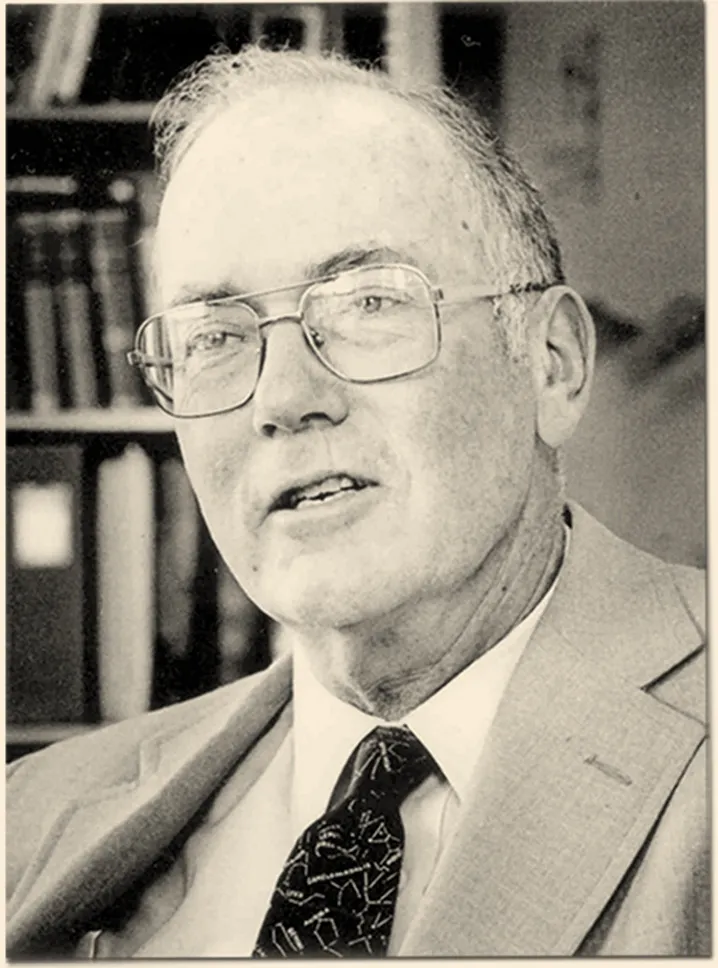
Charles Hard Townes
1964 Nobel Laureate in Physics
1999 Tagore Award Recipient
2005 Templeton Laureate
Keynote Speech of the 3rd Annual Townes and Tagore Seminar on the Global Water Crisis
Sponsored by the U. C. Berkeley Department of Public Health
University of California at Berkeley, July 21st 2012
Dedication to Bangabandu Sheikh Mujibur Rahman
Charles Townes desires that the Third Annual Townes and Tagore Seminar on the Global Water Crisis be dedicated to the founding father of Bangladesh, Bangabandu Sheikh Mujibur Rahman (1920 - 1975), to acknowledge his respect for this great statesman who sacrificed his life in the cause of a secular, independent democracy.
The Third Annual Townes and Tagore Seminar is lovingly dedicated to
Bangabandu Sheikh Mujibur Rahman
(1920 - 1975)
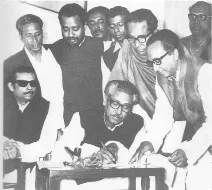
Sheikh Mujibur Rahman, seated. Current President, Zillur Rahman, in foreground second from right, and Rashbihari Ghosh, standing fourth from right, with six other members of the Awami League. Photo from Father of the Nation, written by his daughters, Sk. Hasina, the Prime Minister of Bangladesh, Sk. Rehana, and others. © 1997.
Contents
- Dedication to Bangabandu Sheikh Mujibur Rahman
- Biographies of Charles H. Townes and Rabindranath Tagore
- “The Stream of Life” from Gitanjali by Rabindranath Tagore
- The Poetry of Light: Charles Townes, Rabindranath Tagore, and the IIBHB by John Paulin
- The Water Crisis: What Science Can and Should Do, Keynote Address by Charles H. Townes
- About the International Institute of the Bengal and Himalayan Basins (IIBHB)
- Program for the 2012 Townes and Tagore Seminar on the Global Water Crisis
- An Open Letter from Charles H. Townes
Biographies of Charles H. Townes and Rabindranath Tagore
Professor Charles Hard Townes was born in 1915 and invented the microwave laser, or maser, in 1953 while at Columbia University. His discovery of this technology made possible many subsequent scientific revolutions and earned him the 1964 Nobel Prize in Physics. Dr. Townes also received India’s Rabindranath Tagore Award in 1999, and he became the 2005 Templeton Laureate for his writings on religion, spirituality, and ethics. In 2003, he gave the Birla and Schrödinger Lectures in India. His public service includes chairing the Human Rights Section of the New York Academy of Sciences, the Advisory Committee on the first human moon landing, and Ronald Reagan’s MX missile commission, where his efforts led to an 80% reduction in the administration’s eventual missile deployment. He is currently Professor Emeritus of Physics at the University of California at Berkeley. Along with Glenn Seaborg and Dr. Ghosh, he is the cofounder of the International Institute of the Bengal Basin, Or IIBHB. Charles will celebrate his 97th birthday on July 28th.
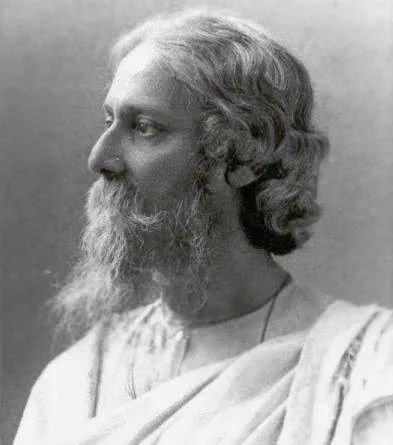
Rabindranath Tagore (1861-1941), the great Bengali poet, wrote Gitanjali, Sanskrit for “Offerings of Song,” the collection of poems for which he was awarded the 1913 Nobel Prize in Literature, becoming the first Asian to be recognized by the Nobel Committee. As does much of Mr. Tagore’s work, Gitanjali celebrates the beauty and value of nature and our connection with it. Like Charles Townes, who in 1999 received the Rabindranath Tagore Award, Mr. Tagore was a scholar and a religious thinker, and he is also regarded as an early environmentalist. The two men also share the study of modern science, a great concern for social equity, and a spirituality that is in harmony with the nature and ecology of our planet. Dr. Ghosh’s interest in work of Mr. Tagore began at the suggestion of his former friend and advisor, Professor Linus Pauling, the recipient of the 1954 and 1962 Nobel Prizes in Chemistry and Peace.
The Stream of Life
The same stream of life that runs through my veins night and day runs through the world and dances in rhythmic measures.
It is the same life that shoots in joy through the dust of the earth in numberless blades of grass and breaks into tumultuous waves of leaves and flowers.
It is the same life that is rocked in the ocean-cradle of birth and of death, in ebb and in flow.
I feel my limbs are made glorious by the touch of this world of life. And my pride is from the life-throb of ages dancing in my blood this moment.
Rabindranath Tagore,
From Gitanjali, 1910
The Townes and Tagore Third Annual Seminar on the Global Water Crisis
The Poetry of Light: Charles H. Townes, Rabindranath Tagore, and the IIBHB, an essay by John Paulin, PhD.
2012 Townes and Tagore Seminar on the Global Water Crisis: Keynote Speech
What Science Can and Should Do: Rabindranath Tagore and a Vision for our Planet, the keynote speech by Charles Hard Townes.
About the International Institute of Bengal and Himalayan Basins
The International Institute of Bengal and Himalayan Basins (IIBHB) is a nonprofit organization headquartered in Berkeley, California, and registered in the United States and India. We work on environmental and ecological issues in California, the Bengal and Himalayan Basins, and in other locations around the world. The IIBHB also supports educational, health, housing and human rights in the Bengal Basin as well as in other areas where its services are needed.
The IIBHB was cofounded by Dr. Rash B. Ghosh, a Bengali-American scientist, Professor Glenn T. Seaborg, the 1951 Nobel Laureate in Chemistry and discoverer of Plutonium, and Professor Charles H. Townes, the inventor of laser technology, the 1964 Nobel Laureate in Physics, and the 1999 and 2005 recipient of the Tagore and Templeton awards. Rash earned his Ph.D. in hydrology under the direction of Professor William Kershaw at the University of Manchester in Great Britain, and during the 1980s he was introduced to the works of Rabindranath Tagore by his friend and advisor, Linus Pauling, the 1954 Nobel Laureate in Chemistry and 1962 Laureate in Peace. Rash has been the Charles H. Townes Chair Professor of Water and Environmental Chemistry since 2008.
The IIBHB has attracted a wide range of experts in many fields who are ready to assist in the search for solutions to the various water problems that exist throughout the Bengal and Himalayan Basins and the rest of the world. In addition to Linus Pauling, prominent scientists associated with the IIBHB have included Nobel Laureate in Chemistry, Glenn Seaborg, Nobel Laureates in Physics, Arno Penzias and Douglas Osheroff, and its current advisor, Charles Townes, a prominent advocate for South Asian issues. The IIBHB has local chapters in England, Bangladesh, and India.
Our mission is to operate globally using our experience in South Asia and California to create working models that address the water crises in emerging economies. The Himalayan and Bengal Basins and their vast catchment areas are home to one of our planet’s most important fresh water resources. This region includes vastly different hydrologies, geologies, and ecosystems, and it spans elevations ranging from the world’s highest peaks to one of the lowest lands on the planet. The extreme differences in elevation, geography, and ecology make this region exceptionally valuable for developing water management and remediation technologies for the rest of the planet.
The IIBHB offers pro bono environmental consulting services to industries, landowners, and citizens in the US, on the Indo-Bangla Subcontinent, and elsewhere. Two-hour sessions are available with additional hours for those working for the benefit of the community, including nonprofit and political organizations. Confidentiality is assured. Expert advice is available from the faculty of some of the best universities in the United States, Europe, and the Indo-Bangla Subcontinent.
Contact director@iibhb.org
510-870-4988
Credits
- Photo of Charles Townes pp.1, 3, & 10 courtesy of Dr. Townes.
- Photo of Sheikh Mujibur Rahman, p.2, from Father of the Nation, written by his daughters, Sheikhs Hasina and Rehana, © 1997.
- Photo of Rabindranath Tagore, text of “Stream of Life,” and Bengal map, p.3, Wikipedia.
Editing, layout, and graphic design by John Paulin
Program for the 2012 Townes and Tagore Seminar on the Global Water Crisis
- 1:30–2:00 pm
- Reception/Mixer
- 2:00–2:15 pm
- Musical Presentation
- Sushmita Ghosh
- Gail Muldrow
- 2:15–2:45 pm
- Seminar Introduction
- Rosalie Say
Welcome - “No Man is an Island,” Founder’s Introduction: Mamade Kadreebux
- Welcome and Prefatory Remarks, Rash B. Ghosh, PhD, Founder, IIBHB
- Special words from Friends & Well-Wishers of Professor Charles Townes
- 2:45–4:00 pm
- Session 1
- The Global Water Crisis in Relation to Groundwater
Rash B. Ghosh, PhD, Founder, IIBHB - Charles Townes and the Poetry of Light: Introduction of the Keynote Speaker
John Paulin, PhD, Technical Writer and Editor, IIBHB - Keynote Address: What Science Can and Should Do: The Global Water Crisis: Tagore and a Vision for our Planet
Charles H. Townes, PhD, 1964 Nobel Laureate in Physics, 1999 Rabindranath Tagore Award Recipient, and 2005 Templeton Laureate - 4:00–4:30 pm
- Break
- 4:30–6:30 pm
- Session 2
- The Groundwater Crisis in the Sahel, Africa
Julia A. Walsh, M.D., M. Sc., Professor, School of Public Health, UC Berkeley - The Nile, the Aswan Dam, Water Resources, and Appeal to find the IIBHB a New Facility
Hossam Nasser, PhD - The Living Machine: Recovering Water from Sanitary Wastewater
Derek Whitworth, PhD, President, IIBHB - Introduction of Nobel Laureate Speaker
Derek Whitworth, PhD, President, IIBHB - How Science Changes our Lives
Douglas Osheroff, PhD, 1996 Nobel Laureate in Physics - Low-Cost, Sustainable Industrial Waste Water Treatment in Bangladesh
Sukomal Modak, PhD - Summary and Concluding Remarks
Sterling Bunnell, MD, Former President and Advisor, IIBHB - 7:00–8:00 pm
- Dinner With Laureates
ॐ शान्तिः शान्तिः शान्तिः
السلام عليكم
Peace